Manchester
Learn the basics of framing with
Nick in Manchester
High wycombe
Learn the basics of framing with
Linette in High Wycombe
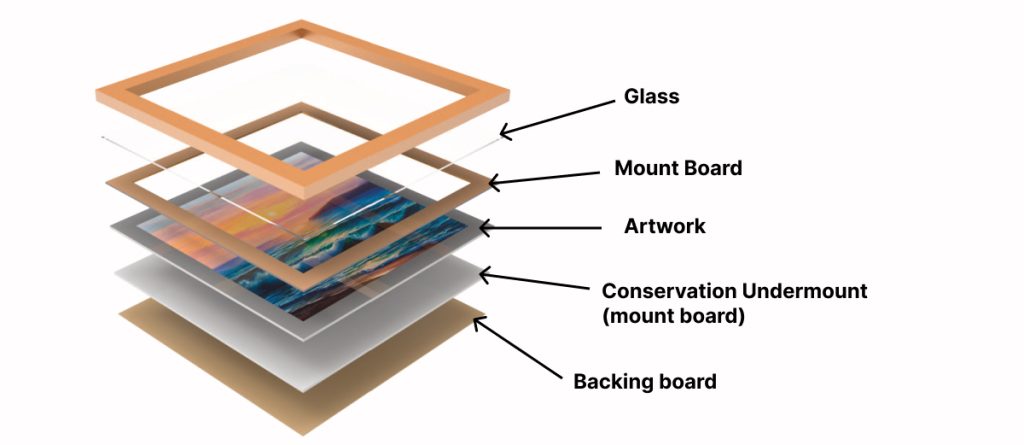
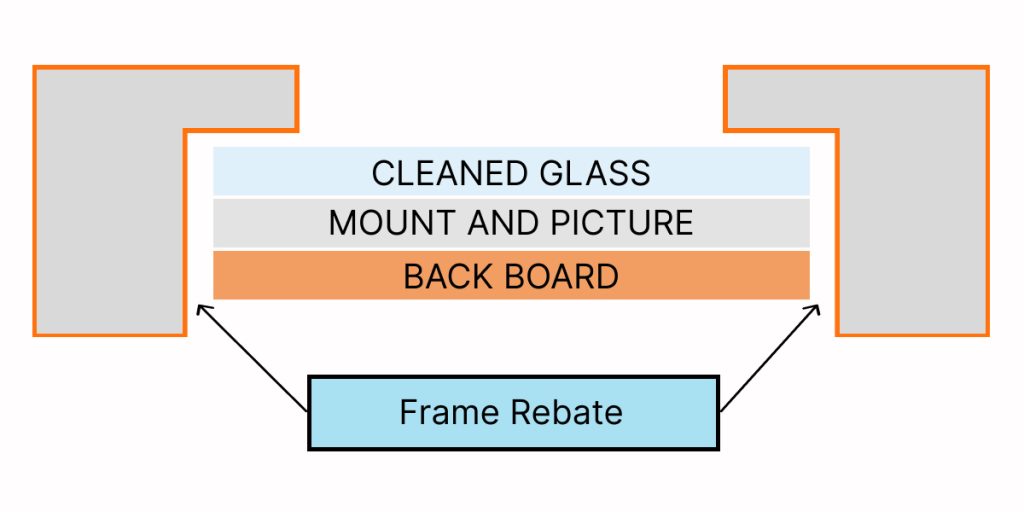
Picture framing glass is specially treated glass used in a frame to create a transparent barrier to protect the artwork. Available with different levels of UV Filters; light reflection, light transmission and UV protection, understanding these filters is key to choosing the right picture framing glass for each framing project.
Here are the UV filters explained in detail:
‘light reflection’ describes the light that gets reflected back to the viewer. To explain it in easy terms, light changes speed when entering a glass surface, which results in not all of the light getting through to the artwork. On uncoated glass, around 8-10% of light is reflected (~4% from each glass surface side). Anti-reflective coatings manipulate these incoming light waves, making it easier for the visible light to travel through.
Light transmission is the amount of (usually visible) light that gets through the glass, onto the artwork. The higher this number, the more light reaches the artwork, ensuring better visibility. Both reflection and transmission percentages are usually adjusted for viewing glass at an 8-degree angle (Because our coatings are optimised for being looked at directly from the front or from angles close to that)
There are two ways that UV protection can work. The first is a useful side-effect of anti-reflective coatings. These coatings that I described in “Light reflection meaning” work very well to improve transmission within the visible light region of the light spectrum, but a side effect of the process is that the coatings reflect the majority of the light in the UV light spectrum. This is the case Low Reflection Invisible glass & our UV Clarity glass. The UV block is achieved through reflection (reflecting 70% and 92% of UV light respectively, instead of transmitting it through to the artwork).
For our 99% protection glass products(UV Museum & UV plain), the protection is achieved with an additional production step – a chemical coating layer that provides a museum-grade UV protection layer. In this case, the UV block is achieved through absorption. You can watch this link to see more about the chemical coating process in this video
Video provided by ARTGLASS
